
French Drain Installation in Ann Arbor, MI Starts With a Diagnosis
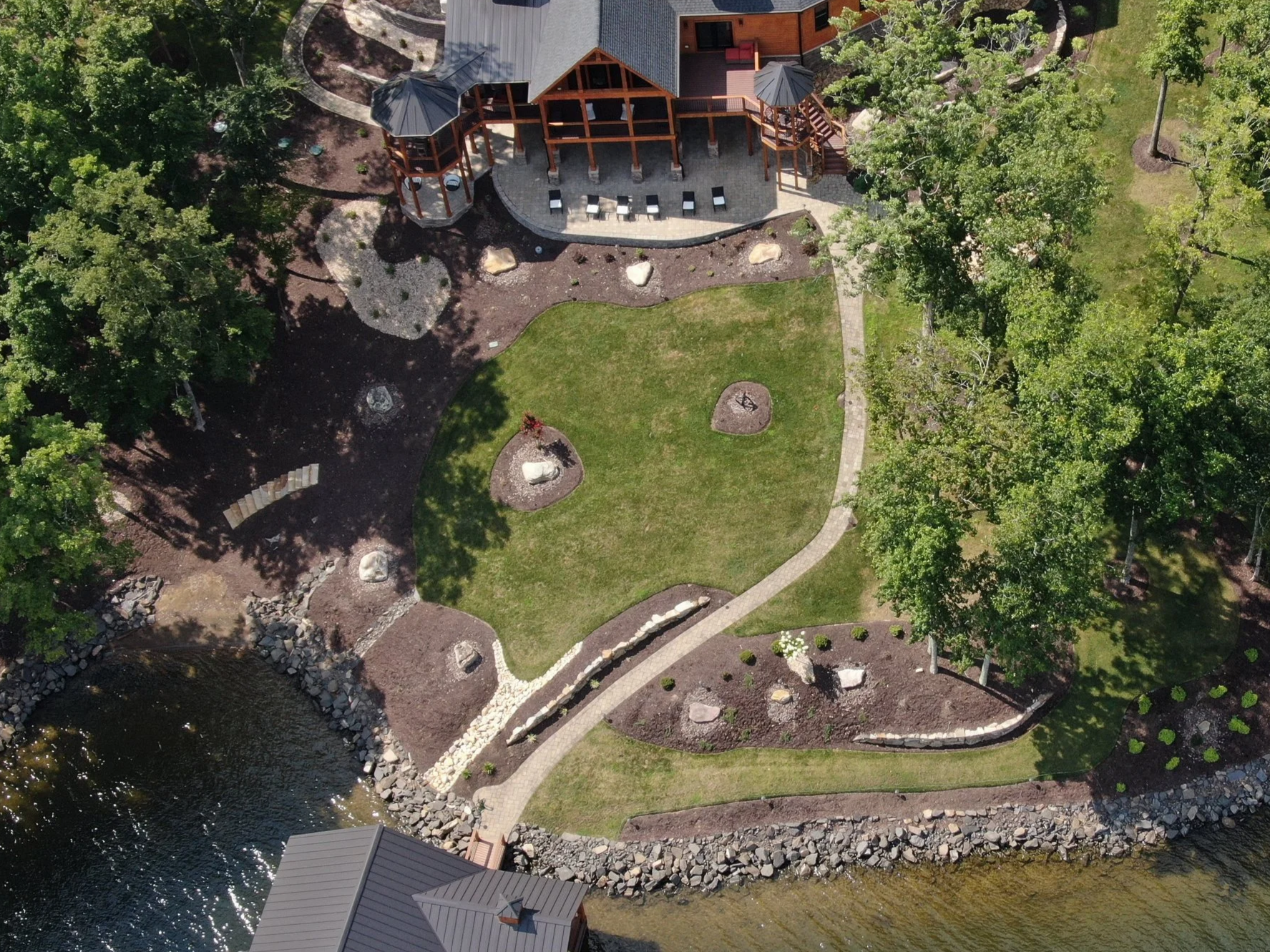
Water shows up where the ground lets it stop, which is rarely where it started, and french drain installation in Ann Arbor, MI is wasted money until somebody has worked out which of those two they are looking at.
A buried drain is a simple object: a trench, a fabric, a stone, a pipe and a fall. Almost every failure comes from installing one where the real problem was grade, or from sending it somewhere that cannot take water when it is needed most.
At Great Outdoors, we have extensive experience in helping customers avoid unwanted water pooling and puddling issues through the use of our effective and reliable drainage solutions. Avoiding the problem, rather than moving it twenty feet, is the part that takes judgment. That judgment starts with a diagnosis rather than a trench.
Related: Drainage Systems That Help Protect Landscapes in Ann Arbor, MI
What Is the Water Actually Doing on the Property?
The water on a wet property is doing one of three things: running across the surface, sitting in a low spot, or moving through the soil until clay stops it.
Surface water arrives from a neighbor, a roof or a drive. Low-spot water collects because the grade has nowhere to send it. Subsurface water travels underground and surfaces where a tight layer turns it sideways.
A buried trench drain answers the first and the third, and it does very little for the second, which needs earth moved rather than pipe buried. Telling them apart takes a visit during or just after rain. That is why the first appointment should be scheduled around weather rather than convenience.
How Is a Wet Property Surveyed Properly?
A wet property is surveyed properly with shot elevations rather than opinions. Elevations produce a map of where water does and does not travel, and that map frequently contradicts what everybody assumed from looking at the lawn, since the route water actually takes is often two feet from where the homeowner points.
Combine that map with test holes at several locations, a look at where downspouts discharge and a note of what neighboring ground sends across, and the problem becomes an arithmetic exercise rather than a mystery.
Why Does Washtenaw County Clay Make French Drains Harder?
Washtenaw County clay makes french drains harder because it holds water rather than passing it. Much of the ground around Ann Arbor, Scio and Lodi behaves this way, and that single property changes every decision. Water that would soak away in sandy soil instead perches, travels sideways and arrives at the lowest point on a property with nowhere to go.
Clay also means a dry well is frequently a hole that fills once and then stays full. Anywhere the subsoil is tight, the drain has to end somewhere water actually leaves rather than somewhere it is stored. That one constraint rules out a good share of the options before any design begins.
What Does a Drainage Test Hole Tell You in an Afternoon?
A drainage test hole tells you in an afternoon how fast the soil actually moves water. Dig down a couple of feet, fill the hole with water and watch: a hole that empties in an hour says one thing, while a hole still holding water the next morning says something else entirely and rules out half the options. It costs nothing and prevents the most expensive mistake in this whole category.
Where Can Drain Water Legally and Practically Go?
Drain water has to go downhill, to somewhere that still accepts it when everything is already wet. Daylighting a line on a slope so it discharges into a swale or a wooded edge is the most reliable outcome available. A storm connection, where one exists and is permitted, comes next.
A dry well works in soil that drains and becomes decorative in soil that does not. Aiming a discharge across a boundary onto a neighbor is unacceptable anywhere. Any plan that quietly does so is a dispute waiting for the first serious storm.
Which Drainage Methods Answer Which Problems?
Each drainage method answers a specific problem: trench drains intercept, catch basins collect, surface channels catch sheet flow and swales move volume.
A stone-filled trench drain intercepts water moving through the soil and water running across a slope. A catch basin with a solid outlet line collects water that already pools at a defined low point and takes it away.
A surface channel across a drive or walk catches sheet flow before it reaches something you care about. A swale, simply a shaped depression that is planted or grassed, moves large volumes cheaply where there is room.
Most wet properties need a combination, and naming which element solves which problem is the difference between a plan and a trench.
Why Is One Long French Drain Rarely the Answer?
One long french drain is rarely the answer because water arrives from different directions and at different depths.
A single trench running the length of a property is easy to price and frequently wrong, since a line placed to catch one source often runs uphill of another. Two shorter runs aimed at two identified sources outperform one long line in most cases.
When Is Regrading the Better Answer Than a French Drain?
Regrading is the better answer whenever the ground itself is the problem. A shallow saucer in a lawn, a patio that falls back toward the house, or a bed built up against a foundation over the years needs earth moved and a positive fall re-established rather than a pipe.
Regrading is less glamorous than a trench and frequently cheaper. A contractor who proposes it when it is the right answer is telling you something useful about how they will handle the rest of the project. It is also the step that makes any drain installed afterward work less hard.
How Does Roof Water Fit Into a Drainage Plan?
Roof water usually turns out to be most of the volume in a drainage plan. A roof sheds an enormous quantity of water into a few small points, and downspouts that discharge at the foundation cause a surprising share of wet yards.
Piping that water away separately in solid pipe takes the largest single load off the system, while mixing roof water into a french drain overwhelms the stone column during exactly the storms it was built for.
What Goes Into a French Drain Trench, in What Order?
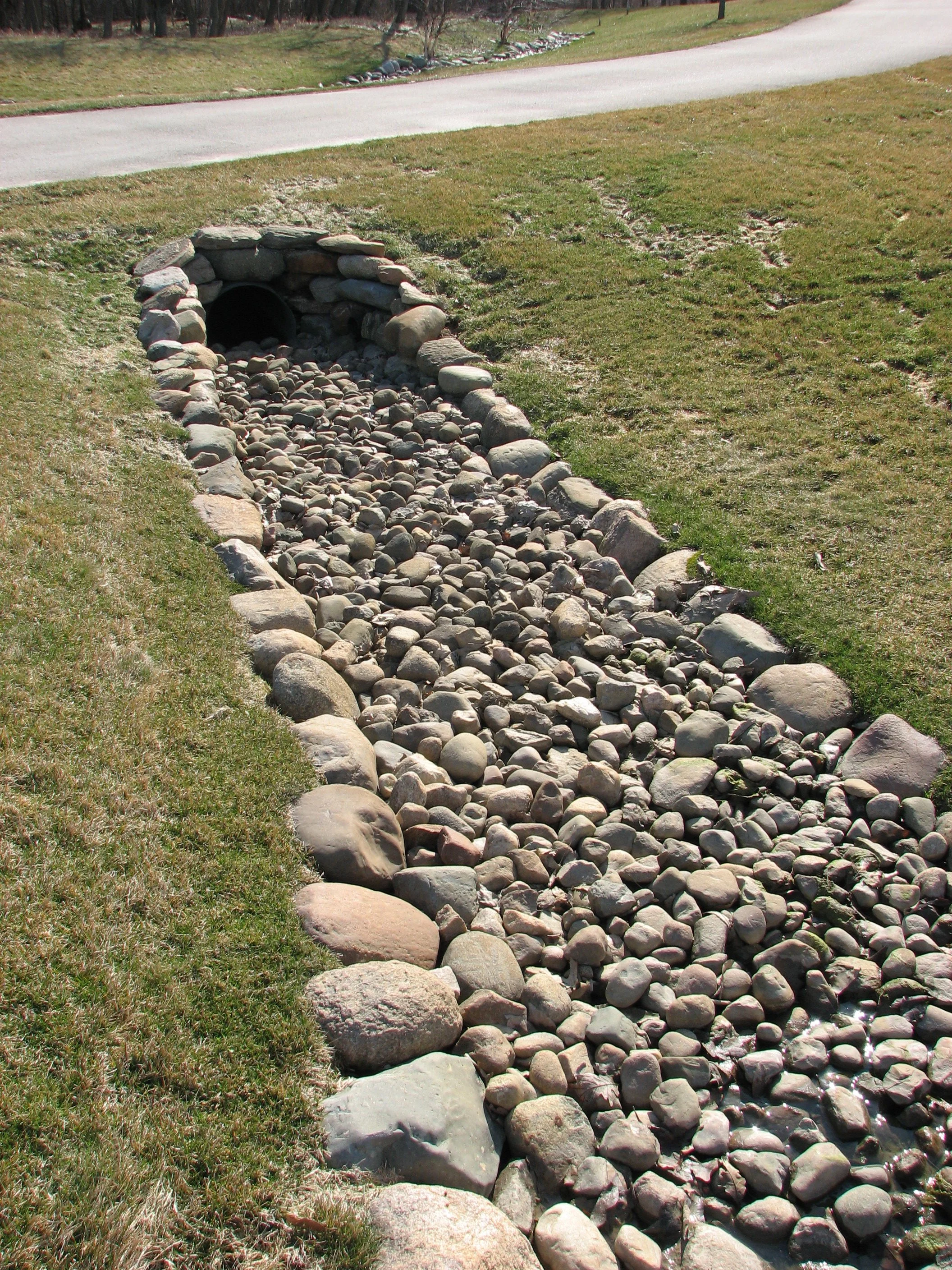
A french drain trench is built from fabric, washed angular stone, a perforated pipe, more stone and a closed fabric wrap, in that order. The fabric wraps the whole trench first and laps at the top so silt cannot migrate in from the sides. Washed, angular stone goes in next rather than rounded pea gravel, because angular material holds its void space under load.
The perforated pipe sits in that stone with the holes facing down, which surprises people and is correct, since water enters from below through the stone column rather than falling in from above.
More stone goes over the top and the fabric folds closed. A stone surface or a thin cap of soil and turf finishes the line, depending on how it is meant to be used.
How Much Fall Does a Buried French Drain Need?
A buried french drain needs roughly an inch of drop over eight feet of run, held across the whole length rather than averaged.
A line that dips in the middle holds water in that dip, and standing water inside a pipe is where silt settles and where a freeze does damage. It’s a common installation fault and invisible from the surface until the line stops working two years later.
What Does the Finished Surface Over a French Drain Look Like?
The finished surface over a french drain depends on whether the line collects surface water or only intercepts subsurface water. A surface-collection drain needs a permeable finish, meaning exposed stone at the top or a shallow turf cap with an open structure above the fabric, while a subsurface drain gets capped with soil and seeded so it disappears. The failure to avoid is capping a surface-collection drain with heavy topsoil, which seals it and produces a system that works for one season and then looks like a strip of unusually green grass.
Related: How Professional Drainage and Plantings Work Together in Salem Township, MI
What Kills a French Drain That Was Installed Correctly?
Silt, roots and buried outlets kill french drains that were installed correctly. Fine material works its way into the stone column over years and slowly reduces the void space, which is what the fabric wrap is there to slow down. Roots follow water and eventually find a perforated pipe, particularly where a line runs near willows or maples.
An outlet gets buried by a mower, grown over or crushed. Of those three causes, the outlet is the one a homeowner checks in a minute. It is also the one most often responsible for a line that has apparently failed.
What Does French Drain Installation Do to a Lawn and Garden?
French drain installation leaves a scar across a lawn or garden for a season, and how that scar is handled says a lot. A trench means a machine, a line of spoil and a run of disturbed ground across whatever was there.
Good practice means stripping and saving the turf where it is reusable, keeping spoil on boards rather than the lawn, and restoring the line properly rather than throwing seed at it in August. Where a route passes a mature tree, the trench goes outside the critical root zone or the work is done by hand. Solving a wet corner by killing an oak is a poor trade.
What Should a Drainage Assessment Produce?
A drainage assessment should produce a sketch with elevations rather than a verbal opinion. It should show where the water enters the property, where it collects, what the test holes showed, where the proposed discharge is, and what the fall along the route works out to.
It should also say which parts of the problem are grade and which are subsurface. Reviewing the drainage solutions we plan for Washtenaw County properties alongside that sketch shows what a finished scope covers. The sketch is also what lets two quotes be compared on the same terms.
What Separates Two Drainage Quotes?
Whether anyone measured separates two drainage quotes. Ask each contractor where the water is coming from, what the fall along their proposed route is, where the discharge goes, and what happens when the receiving ground is already saturated.
A quote that names a trench length and a price without answering those four is pricing a shape rather than solving a problem, and it gets corrected later at your expense.
How Should French Drain Installation Be Timed?
French drain installation should be diagnosed wet and built dry. The visit that identifies the problem needs rain on the ground, because a property in August tells you almost nothing about what it does in March.
The excavation itself needs workable ground, which in a Michigan year means late spring through autumn. Early autumn gives the strongest combination of dry trenching conditions and enough season left for restored turf to establish before winter.
How Does a Drainage Plan Sit Alongside the Rest of the Landscape?
A drainage plan sits underneath the rest of the landscape and ideally goes in before it. The cheapest time to run a drain line is while ground is already open for grading, a new terrace or a planting scheme, and doing it the other way round produces a new lawn with a trench cut through it the following spring.
Where a property is worked on in phases, drainage belongs in the first phase, and a plan drawn early also tells the planting designer which areas will stay wet before anything is ordered.
Get Your French Drain Installation Diagnosed Before Anything Is Dug
Point out where the water sits and we will come and look at it while the ground is still wet, dig test holes and shoot the elevations before recommending anything.
Great Outdoors puts the diagnosis, the route and the discharge point in writing, so the drainage you buy is a decision made from evidence rather than a guess at the surface. Schedule your french drain installation assessment with Great Outdoors.
In Summary
Where is a french drain supposed to end?
A french drain is supposed to end somewhere lower than it starts that still accepts water when the ground is already saturated. A line that daylights on a slope works, while a line that ends in a buried pit in clay just relocates the problem underground.
Will a drain fix a wet yard on its own?
A drain fixes a wet yard on its own only when subsurface or surface flow is the cause. Often the grade is doing most of the damage, and regrading a low corner does more than a pipe would, so the Great Outdoors assessment identifies which one your property actually needs before anything is dug.
How long does a buried drain keep working?
A buried drain keeps working for many years when the fabric, the stone and the fall are right, and for a couple of seasons when they are not. Silt is what ends most of them, so the wrap and the stone size matter more than the pipe does.
Related: How Expert Lawn Service Can Elevate Your Green Oak Township, MI, Outdoor Space
About the Author:
For nearly 40 years, Great Outdoors has been growing relationships by providing high-quality residential and commercial landscaping services for the greater Southeast Michigan area. Specializing in full-service lawn care and creative outdoor living solutions, we utilize state-of-the-art equipment, high-end materials, and quality workmanship. We’ll help create the perfect yard to accent and complement your home.
