
How a Retaining Wall Becomes a Design Feature in Your Ann Arbor Outdoor Living Space
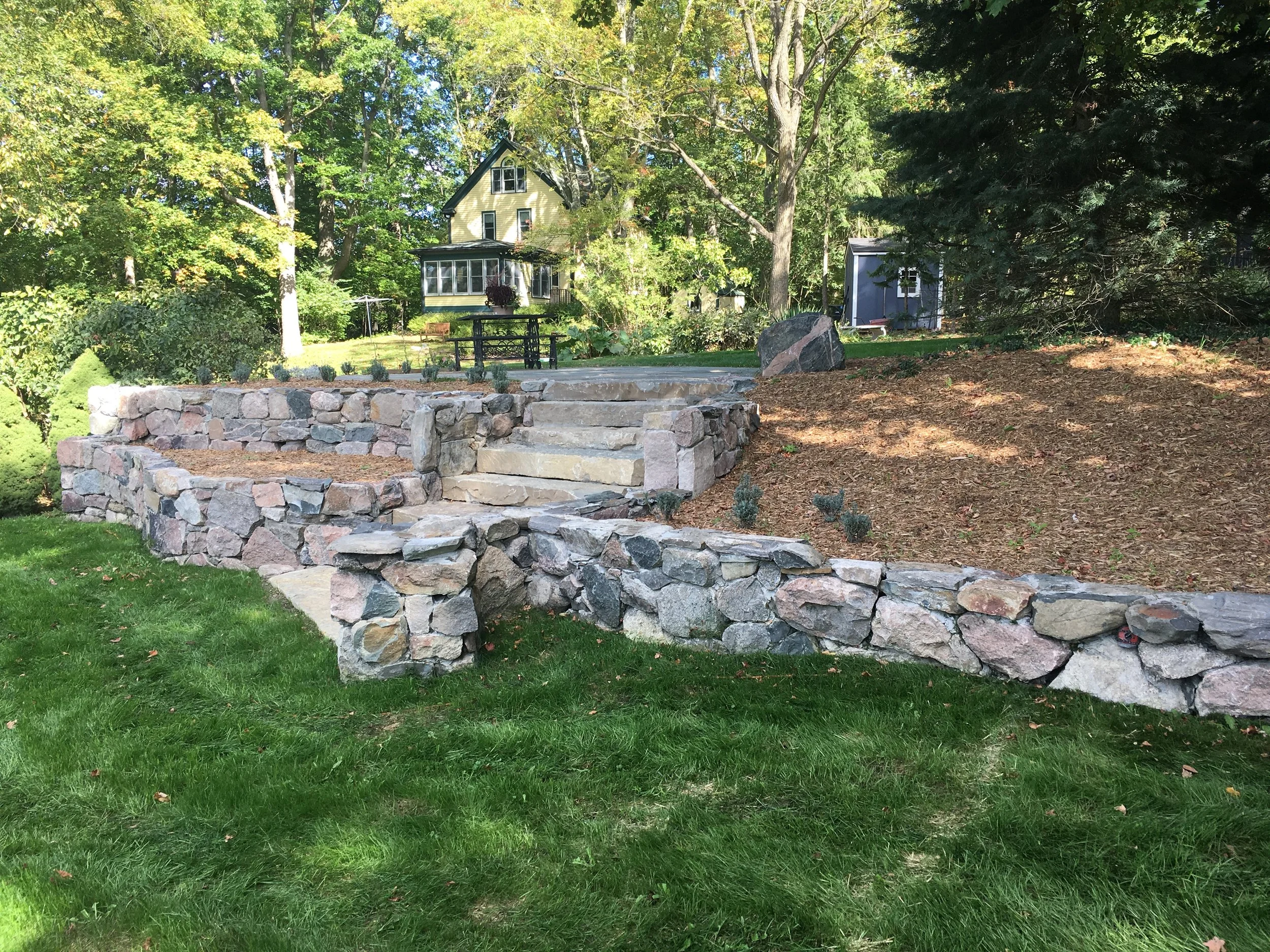
Most homeowners start thinking about a retaining wall because they have a problem to solve. A slope that makes the yard difficult to use, a drainage issue that shows up after every rainstorm, a hillside that erodes a little more every spring.
Those are real and valid reasons to build a retaining wall, and solving them matters. But the homeowners who end up with outdoor spaces they are genuinely proud of are the ones who discovered something else along the way: a well-designed retaining wall does not just solve a problem. It becomes one of the most visually compelling elements in the entire backyard design.
In Ann Arbor and the surrounding Southeast Michigan communities, where residential properties frequently deal with grade changes, heavy clay soils, and the demanding freeze-thaw cycle of Michigan winters, a custom retaining wall delivers structural performance and serious design impact in the same installation.
Great Outdoors has been building retaining walls across this region for nearly 40 years, and the projects our team is most proud of are the ones where the wall stopped being infrastructure and started being the centerpiece.
Related: Why Low-Voltage Landscape Lighting & Retaining Wall in Chelsea, MI, Work Better Together
What's the Difference Between a Landscape Wall and a Retaining Wall?
This question comes up in almost every design consultation, and the distinction matters for understanding what your project actually requires.
Landscape Walls: Decorative Structure With Limited Load
A landscape wall is a freestanding structure built primarily for aesthetic purposes. It defines spaces, creates visual interest, adds elevation change to a flat yard, and provides seating or planting bed edging.
Landscape walls do not hold back significant volumes of soil. They are typically shorter, built without the drainage infrastructure that a true retaining wall requires, and are designed to stand independently without lateral soil pressure acting against them.
Landscape walls are a powerful design tool in Ann Arbor backyard design projects. A low freestanding wall built from Unilock pavers or natural fieldstone creates defined outdoor rooms, adds seating capacity around a fire feature, and establishes visual anchors in a planting scheme.
Our designers incorporate landscape walls into projects where grade change is minimal but spatial definition and design character are priorities.
Retaining Walls: Engineered Structures Under Real Load
A retaining wall is an engineered structure designed to resist the lateral pressure of soil bearing against it. Every retaining wall holds back a mass of earth, and that mass exerts continuous horizontal force against the wall face.
The wall's design, foundation, drainage system, and material selection all work together to resist that force across decades and through the seasonal freeze-thaw stress that Southeast Michigan's winters deliver.
The engineering distinction is significant. A retaining wall that fails does not just look bad. It moves, tilts, or collapses, releasing the soil it was holding and potentially damaging everything in its path.
This is precisely why retaining wall design and construction belong exclusively in the hands of experienced professionals, and why the structural details that are invisible in the finished wall are the ones that matter most.
How Can I Customize a Retaining Wall?
Here is where the conversation gets exciting for homeowners who have been thinking about their retaining wall purely as a structural necessity.
The customization options available in a professionally designed retaining wall project are extensive, and the choices made at this stage transform a functional structure into a signature element of the outdoor living space.
Material Selection Sets the Visual Tone
The single most impactful customization decision is material selection. The material your retaining wall is built from determines its color palette, texture, scale, and how it relates visually to your home's architecture and the surrounding landscape.
Unilock Segmental Products: Engineered Consistency With Natural Character
Unilock segmental retaining wall products, which Great Outdoors installs as an authorized Unilock contractor, offer an extensive range of face textures, colors, and profiles that accommodate everything from a clean contemporary aesthetic to a naturalistic fieldstone appearance.
Products like Unilock's Brussels Dimensional Stone deliver the irregular texture of natural stone with the engineering consistency of a manufactured product, producing walls that look like they grew out of the landscape rather than being placed on top of it.
Natural Stone: One-of-a-Kind Character for Southeast Michigan Properties
Natural stone retaining walls using granite, limestone, or Michigan fieldstone bring genuinely one-of-a-kind character to a project.
No two natural stone walls look exactly alike, and in the residential neighborhoods of Ann Arbor, Scio Township, and Hamburg Township where landscape design often references the region's natural character, fieldstone retaining walls integrate into the property in a way that manufactured products approach but rarely fully replicate.
Integrated Seating Walls
One of the most popular customization elements our design team incorporates into retaining wall projects is integrated seating. A retaining wall built at seat height, typically 17 to 19 inches from the top of the cap to the finished grade at the base, creates built-in seating capacity along its entire length.
On a property with a patio adjacent to a retaining wall, this integration eliminates the need for movable seating along the wall face and creates a permanent, cohesive outdoor room that looks intentionally designed because it was.
Cap selection for seating walls carries additional considerations. A smooth, flat cap surface in a material that stays comfortable across Michigan's temperature range, resists staining, and provides an adequate seating width produces a finished product that gets used.
Our designers specify cap materials and dimensions based on how the seating wall will function in the specific project, not on a standard specification applied uniformly.
Planting Pockets and Terraced Beds
A retaining wall system that incorporates planting pockets or terraced planting beds transforms a hard structure into a living element of the landscape.
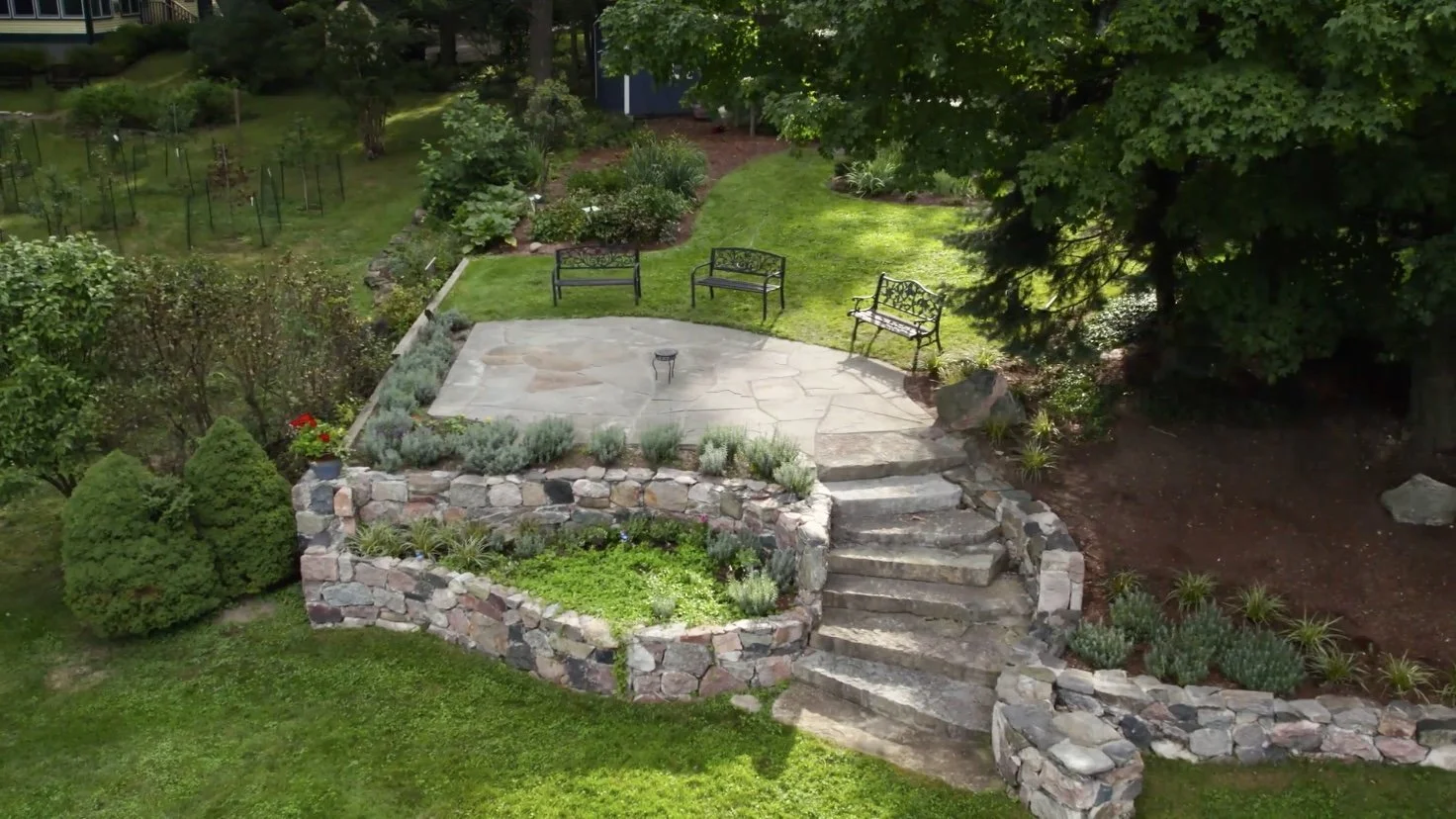
Our design team creates planting opportunities within and adjacent to retaining wall systems by stepping the wall profile, creating recessed planting zones, or designing terraced bed sequences on sloped properties where multiple wall levels produce usable planting areas between grades.
In Ann Arbor's climate, plant selection for these integrated beds accounts for the drainage conditions created by the wall system, the microclimate effects of the wall's sun exposure and orientation, and the USDA Hardiness Zone 6a conditions that define what thrives in this region.
Species that perform in these integrated planting situations include ornamental grasses, creeping phlox, sedum varieties, and native perennials that establish quickly and soften the wall's face naturally over time.
Lighting Integration
Landscape lighting integrated into a retaining wall system extends the visual impact of the wall into evening hours and defines the outdoor living space after dark.
Our installation teams incorporate low-voltage LED lighting into retaining wall cap joints, step risers, and planting pockets during construction, routing wiring through the wall system before final installation so no surface-mounted conduit or visible wiring compromises the finished appearance.
Are There Different Types of Retaining Walls?
Yes, and the type of retaining wall appropriate for your project depends on the height of the wall, the soil conditions at the site, the drainage requirements, and the aesthetic direction of the overall landscape design.
Segmental Retaining Walls
Segmental retaining walls are built from interlocking manufactured blocks engineered specifically for retaining wall applications. The interlocking profile of each unit, combined with a battered setback that angles the wall face slightly back into the retained soil, produces a gravity-based retaining structure that performs reliably across a wide range of wall heights.
For walls under four feet in retained height, segmental systems are the most common choice in residential landscape design projects across Southeast Michigan. Their material consistency, color availability, and proven performance in freeze-thaw conditions make them a reliable specification for Ann Arbor area properties.
For walls exceeding four feet in retained height, segmental retaining wall systems require geogrid reinforcement layers embedded in the backfill at specified intervals. These layers extend horizontally back into the retained soil mass and anchor the wall system against the increased lateral pressure that taller walls experience.
Our installation crews are trained in geogrid placement specifications and install reinforcement layers according to the manufacturer's engineering requirements for each project.
Natural Stone Retaining Walls
Natural stone retaining walls, built from cut or dry-laid fieldstone, limestone, or granite, bring an irreplaceable material quality to a project. The visual character of natural stone is genuinely difficult to replicate, and in high-design residential projects where every material decision matters, natural stone retaining walls deliver an authenticity that resonates with the overall landscape design intent.
Natural stone walls require skilled masons who understand how to select, fit, and set stone for structural stability rather than appearance alone.
Our masonry team has built natural stone retaining walls across Ann Arbor, Scio, and Lodi Township for decades, and the walls built by our craftspeople reflect that accumulated skill in the way each course fits together and the way the finished wall settles into the landscape.
Poured Concrete and Concrete Block Walls
Poured concrete and concrete masonry unit retaining walls are common in commercial applications and in residential projects where very high retained heights require the structural capacity that these systems provide.
In residential backyard design projects, these walls are typically finished with a stone veneer or stucco coating that integrates them visually with the surrounding landscape rather than leaving the concrete face exposed.
What's the Strongest Material for a Retaining Wall?
Strength in a retaining wall is a combination of the material's structural properties, the engineering of the wall system, and the quality of the installation. No material is strong in a retaining wall application if the drainage, base preparation, and installation are not executed correctly.
Poured Concrete: Maximum Structural Capacity
Poured concrete delivers the highest structural capacity of any residential retaining wall material.
A properly reinforced poured concrete wall resists lateral soil pressure that would cause segmental or natural stone walls to require significantly greater width or reinforcement to match. In applications requiring very tall retained heights or unusually heavy loads, poured concrete is the specification that delivers the required structural performance.
The trade-off is aesthetic. Poured concrete walls require finishing to integrate into a residential landscape design, and that finishing adds material and labor to the project scope.
Segmental Systems: Engineered Performance at Residential Scale
For the retained heights common in residential projects across Ann Arbor and Southeast Michigan, specifically walls in the two to six foot range, properly installed segmental retaining wall systems with geogrid reinforcement where required deliver structural performance that meets the demands of the application.
The manufacturing consistency of segmental products means that each unit performs to documented engineering specifications, and the installation methodology is based on tested design guidelines rather than field judgment alone.
The Foundation and Drainage Are the Real Strength Story
Here is the detail that separates walls that last from walls that fail within a few years: the foundation and drainage system behind the wall matter more than the face material in determining long-term structural performance.
A retaining wall built on a properly compacted crushed stone base, with a drainage aggregate backfill and a perforated drain pipe at the base of the wall that directs water away from the wall system, performs across decades of Michigan freeze-thaw cycles. The same wall built without those elements fails as water accumulates behind the face, freezes, expands, and pushes the wall forward.
Our installation crews prepare every retaining wall foundation and drainage system to the same standard regardless of wall height or material, because the invisible work is where the performance is built.
Does a Retaining Wall Need a Permit in Ann Arbor?
This is a practical question that every homeowner planning a retaining wall project in Ann Arbor and surrounding Washtenaw County communities needs to answer before construction begins.
Michigan Permit Requirements for Retaining Walls
In Ann Arbor and most municipalities across Southeast Michigan, retaining walls exceeding a certain height require a building permit before construction begins.
The threshold varies by municipality, but walls exceeding four feet in total height, measured from the bottom of the footing to the top of the wall, typically require a permit and in some cases a stamped engineering drawing. Walls on properties adjacent to slopes, waterways, or public rights of way may trigger additional review requirements regardless of height.
Our team navigates the permit process for every project that requires one. We prepare the documentation, submit the application, and coordinate inspections according to the municipality's requirements.
Homeowners working with Great Outdoors do not manage permit logistics themselves. Our project managers own that process from application through final inspection sign-off.
Why Permitting Protects Your Investment
A retaining wall built without a required permit creates complications that extend well beyond the immediate project.
Unpermitted work discovered during a future property transaction requires resolution before closing, and a wall built without engineering review may not meet the structural standards required by the municipality.
Starting the process correctly, with permits in place and inspections scheduled, produces a finished installation that carries no compliance liability.
Building the Wall Your Property Deserves
A custom retaining wall in your Ann Arbor outdoor living space delivers structural performance and design character in equal measure.
The slope that made your yard difficult to enjoy becomes a series of usable terraced levels. The drainage problem that showed up every spring gets resolved at its source. The backyard that felt like an obstacle becomes an outdoor living space with defined rooms, integrated seating, evening lighting, and planting that softens every hard edge.
Great Outdoors designs and builds custom retaining walls across Ann Arbor, Hamburg Township, Scio Township, Lodi Township, and the surrounding Southeast Michigan communities.
Our team brings nearly four decades of local project experience to every retaining wall consultation, and that experience shows in the walls we build and the landscapes they anchor. Contact Great Outdoors to schedule your retaining wall and landscape design consultation.
Related: Protect and Beautify Your Sloped Property With a Retaining Wall in York and Dexter Townships, MI
About the Author:
For nearly 40 years, Great Outdoors has been growing relationships by providing high-quality residential and commercial landscaping services for the greater Southeast Michigan area. Specializing in full-service lawn care and creative outdoor living solutions, we utilize state-of-the-art equipment, high-end materials, and quality workmanship. We’ll help create the perfect yard to accent and complement your home.